
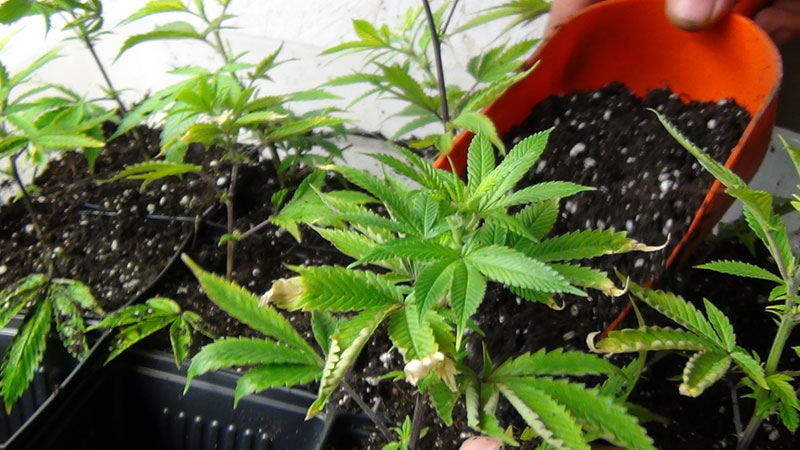
Transplanting young marijuana clones or seedlings is one of the first things novice gardeners need to master. Rooted cuttings are eager to stretch their new appendages and begin feeding. Â For these young plants the first transplant could be equated to a baby’s first taste of solid food. Â We put together a short transplanting video outlining some of the details listed below.
Clean and Sterilize
Transplanting is very simple but there are a few important things that can be easily overlooked. Start with new soil and clean pots to avoid contamination. Plastic pots reused from a previous grow should be sterilized using bleach or hydrogen-peroxide to remove any leftover biological residue that may introduce harmful fungus or insects. Marijuana clones from outside sources should be quarantined for a few days and carefully examined for pests and fungus before introducing them into your grow room. Dipping clones in a foliar pest and fungus control product works great to help prevent introducing new problems into your grow room.
- Use only fresh soil or growing medium
- Clean pots or sterilize used pots
- Quarantine clones from outside sources
- Treat clones for pests if needed
Soil Consistency
It’s important not to fill nursery pots all the way to the top. Instead leave some room for water to pool before it settles into the soil. When potting larger batches try to keep soil levels as uniform as possible. By filling all of the pot to the same level,  each will have uniform water holding characteristics. Pots that may have been under filled hold less water and will dry out faster. Lighter soils tend to settle significantly after the first watering; so slightly compact the loose soil before planting the clone. I like to use the bottom of an extra pot to make this step go quickly. Avoid excessive soil compaction as this will hinder root growth and drainage. Remember to always water after transplanting, this helps settle the soil around the roots and removes any air pockets as well as helping to prevent shock.
- Fill all pots to the same level
- Leave a little space for water
- Avoid over compacting the soil
- Water thoroughly
Soil Amendments and Transplant Aids
Many of the soil amendments used in outdoor gardening can be skipped for plants grown indoors. One additive that should not be skipped is mycorrhizae which can easily be added when transplanting, and can help boost plant health. Mycorrhizae inoculates are normally a blend of beneficial fungi that develop a symbiotic relationship with the plant. Vitamin B1 is thought to reduce transplant shock and diluted1-Naphthalene acetic acid encourages root growth. These two ingredients have been conveniently mixed into a wonderful cocktail by Liquinox. There is some debate as to whether or not vitamin B1 actually works, and plenty of studies (PDF) suggest it doesn’t help.
Size Matters
It is important to transplant into the correct size pot. The clones roots will take some time to outgrow a small or medium pot. While it may save some work to transplant a clone directly into a large pot, this is not advised, especially for indoor growing. Large pots mean lots of soil from day 1 and there are some real disadvantages to this..
- Extra soil mean extra water and nutrients are needed to keep the soil at a consistent moister level. Until the roots have spread out, much of these nutrients will simply drain off and be wasted.
- Unused nutrients leave behind salts in the soil before the roots have even ventured into it; this can cause nutrient lockout problems later on.
- Extra moister in the soil means extra moister in the grow room; this will drive up the humidity potentially creating pest and fungus problems.
- Larger pots mean that your plants must be spaced out; this means you will either be using more lights, or that some plants are receiving less light.
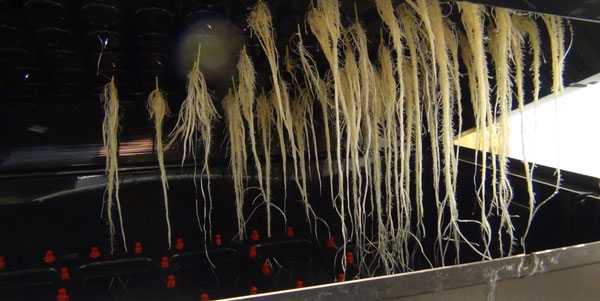
Bare root clones from aeroponic cloning systems like the EZ Clone can be transplanted into soil in much the same manner as clones in rockwool. Handling bare root clones is delicate work and the roots can easily be damaged. Some attention is required to evenly spread out the roots as much as possible. Despite this minor inconvenience, bare root clones are still pretty easy to transplant and thrive when potted properly.
Regardless of what medium your clones may have been rooted in,  a successful  first transplant is paramount in getting them off to a good start. Take the time to assure each young plant gets the attention it deserves, and always water after transplanting!
Transplanting Clones and Seedlings,











How can you tell a male plant from a female plant? I have two plant i grew from from seeds, but i don’t know how tell if i have male or female plants. Is there an easy way to tell? Do you have a video of one that i can watch? this is my second time growing and i don’t know much. I have my licence to grow up to 6 plants. thank you for any advice you can give me my email address is listed below thank you.
thank you
irma.court@gmail.com thank you
Mrs. Irma McKnight
You should check out Ryan’s book that was reviewed here: http://www.marijuanagrowershq.com/growing-elite-marijuana-book-review It has a whole section on sexing plants. As a beginner it’s well worth the money to learn the right way to do things.
If you intend to keep a mother clone for sex if not just change the light cycle
Do i need to have a delicate light cycle for my newly transplanted 7 footer. The transplant was today .
I understand the whole transplanting process but I am confused on one point so let me give it to you with the whole process. So I am using ocean forest fox farm organic soil to grow. I am confused on when I am transplanting I am using new ocean forest fox farm organic soil mixed with a little of the soil from the previous pot. Now that I transplanted it into a bigger pot with new soil and fresh nutrients in the soil. How do I continue to feed my nutrients. Do I stop? for 2 or 3 weeks until the cannabis plant has used the nutrients in the soil and then continue the regular nutrient cycle. Do I cut back on nutrients and only give half of what bottle says for 2 or 3 weeks? or do I just continue giving it normal nutrients??
When you transplant pretty much all of the soil from the previous pot should move with the roots to the small pot. If soil is left behind you are probably transplanting to soon. I would continue feeding as before in the new soil. Give them a few days to make sure they don’t shock from transplant and then continue feeding. Ocean Forest has some nutrients in it but not a lot.
i need help i cut a trimming off of one of my plants to plant into soil and make a new clone but when i did this the clone is starting to wilt i need help fast while there is still time and also no rockwell cubes used just straight into soil
WHATS THE RECIPE ON THE EZCLONER BEST WAY TO GET ROOOOOOTTTTTTTZZZZZZZZZZ WOOOOOWZER
what feed do a give my young outdoor plants ????
NevÅ¡ednà Otázky zde. Jsem Å¡Å¥astný vypadat tvůj Älánek.
DÃky tolik a Jsem pÅ™iÄemž se podÃvat vpÅ™ed do dotykovým Ty.
Budete laskavě napište mi pošty?